On the Fujifilm X-T1…
Some more shots from our wedding anniversary trip to North Yorkshire and County Durham, this time from a couple of hours spent exploring Locomotion – The National Railway Museum at Shildon
I take a lot of images of railways, most are just straightforward record shots, nothing more, but a few little details caught my eye on this particular day…
 N.E.R. Snow Plough No.12
Fujifilm X-T1, Fujinon XF 18-135mm f3.5~5.6 R LM OIS WR at 21mm – 0.8s, f8, ISO 400
The lettering on this restored North Eastern Railway (NER) Snow Plough (built in 1891) is impressive, especially given that such vehicles were/are rarely in the public eye and mainly only seen by railwaymen clearing snow from the tracks. Percy Main is a small village (now part of North Shields, Tyne and Wear) that grew up around the Duke of Northumberland’s railway station on the Newcastle & North Shields Railway that opened in 1839.
 L&NWR Improved Precedent class 2-4-0 No.790 ‘HARDWICKE’
Fujifilm X-T1, Fujinon XF 18-135mm f3.5~5.6 R LM OIS WR at 29mm – 1/13s, f8, ISO 400
This nameplate and fine crest adorn the London & North Western Railway (L&NWR) ‘Improved Precedent’ class 2-4-0 steam locomotive No.790 (built in 1892 at Crewe). Originally designed to haul express passenger services HARDWICKE took 2 hours and 6 minutes to cover the 141 miles between Crewe and Carlisle on 22 August 1895 setting a new speed record during the Race to the North. A close inspection of the nameplate reveals a build date of 1873, this is because No.790 was officially a ‘renewal’ (i.e. replacement of an earlier locomotive) that kept the name and number of its predecessor.
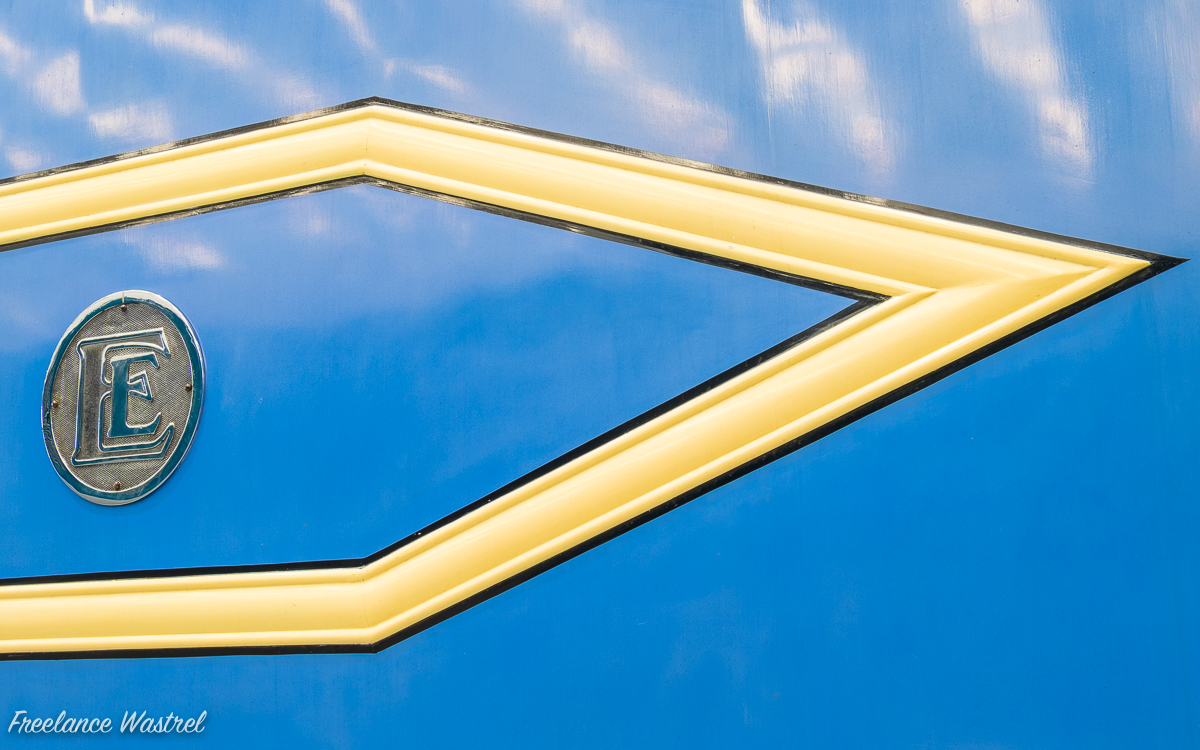 ‘DELTIC’
Fujifilm X-T1, Fujinon XF 18-135mm f3.5~5.6 R LM OIS WR at 27mm – 1/3s, f11, ISO 400
These painted aluminium beadings were designed to give an impression of speed (and visually break up the high bodysides) of the English Electric ‘Diesel Prototype 1’ (DP1) locomotive. A designation it never carried, the loco is commonly known as DELTIC as it employed two Napier Deltic engines giving a combined power output of 3,300hp. Following a serious engine failure DELTIC was withdrawn from service in 1961 and donated to the Science Museum in 1963, moving to the National Railway Museum in York in 1993.
 Beyond hope…


